

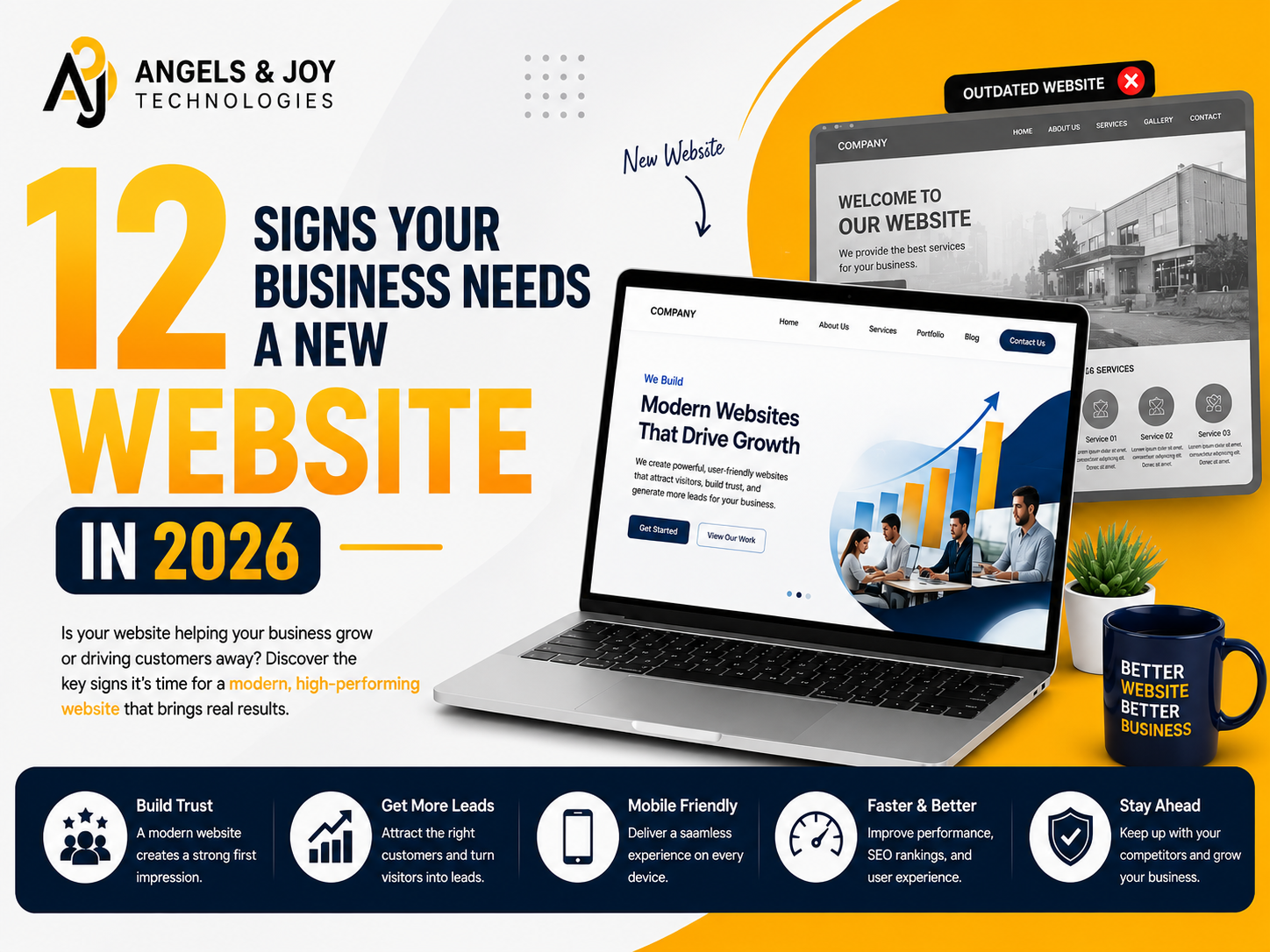
In today’s digital world, your website is often the first interaction potential customers have with your business. Before someone calls your office, visits your store, or sends an inquiry, they usually search online to learn more about your company.
A professional website is no longer just an online brochure—it’s a powerful business tool that builds trust, generates leads, and helps your business grow. However, many businesses continue using websites that were built years ago without realizing how much technology, customer expectations, and Google’s ranking factors have changed.
An outdated website can silently cost you valuable customers every single day. If your website is difficult to use, slow to load, or no longer reflects your business, visitors are likely to leave and choose a competitor instead.
Here are 12 important signs that indicate it may be time to redesign or upgrade your website.
1. Your Website Looks Outdated
First impressions matter.
Studies consistently show that visitors form an opinion about a website within just a few seconds. If your website looks outdated, customers may assume your business is outdated too.
Common signs include:
- Old-fashioned layouts
- Poor typography
- Low-quality images
- Inconsistent colors
- Cluttered design
A modern, clean website immediately builds confidence and encourages visitors to explore your services.
2. Your Website Isn’t Mobile-Friendly
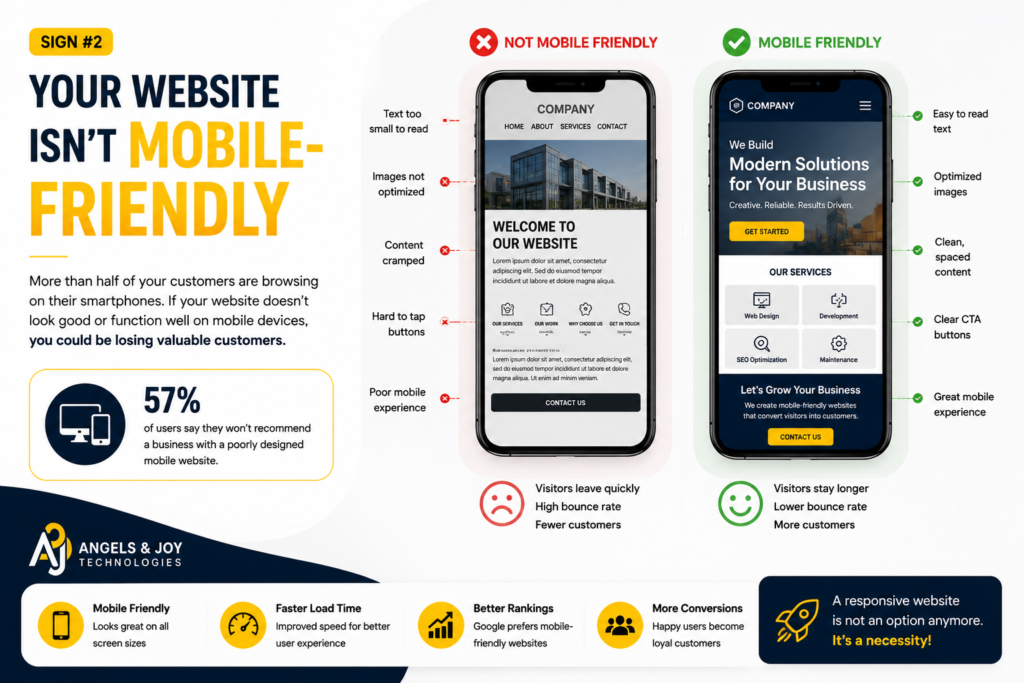
More than half of all internet users browse websites using smartphones.
If your website doesn’t display properly on mobile devices, visitors may struggle to read your content, click buttons, or submit inquiries.
A responsive website automatically adapts to different screen sizes and provides a better user experience across desktops, tablets, and smartphones.
Google also prioritizes mobile-friendly websites in search rankings, making responsive design essential for online success.
3. Your Website Loads Too Slowly
Speed matters more than ever.
Visitors expect websites to load within a few seconds. Slow-loading pages frustrate users and often cause them to leave before they even see your services.
Common causes of slow websites include:
- Large, unoptimized images
- Poor hosting
- Outdated themes
- Too many plugins
- Inefficient coding
A faster website improves user experience, increases conversions, and supports better Google rankings.
4. You’re Not Receiving Leads
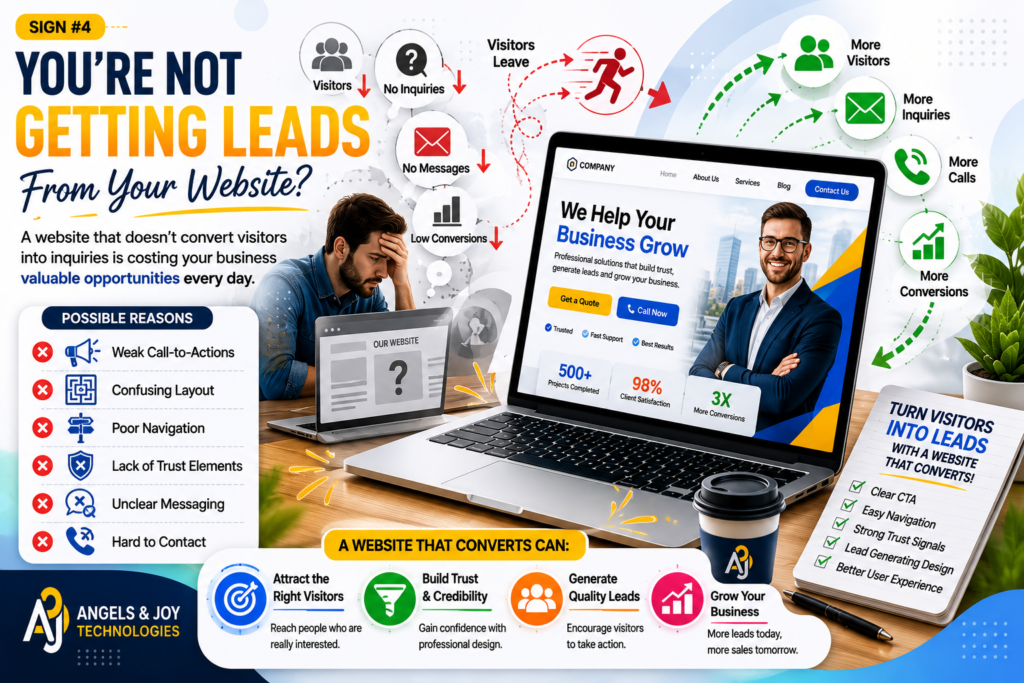
Your website should generate inquiries—not just exist online.
If people visit your website but rarely contact you, the problem may not be your business. It could be your website.
Possible reasons include:
- Weak call-to-action buttons
- Confusing navigation
- Poor content structure
- Missing contact information
- Lack of trust signals
Every page should encourage visitors to take the next step.
5. Your Competitors Have Better Websites
Your competitors are only one Google search away.
If their websites appear more modern, load faster, and clearly explain their services, customers may choose them before even contacting you.
A professionally designed website helps your business compete more effectively by creating a stronger first impression and improving customer confidence.
Remember, customers often compare multiple businesses before making a decision.
6. Your Website Doesn’t Rank on Google
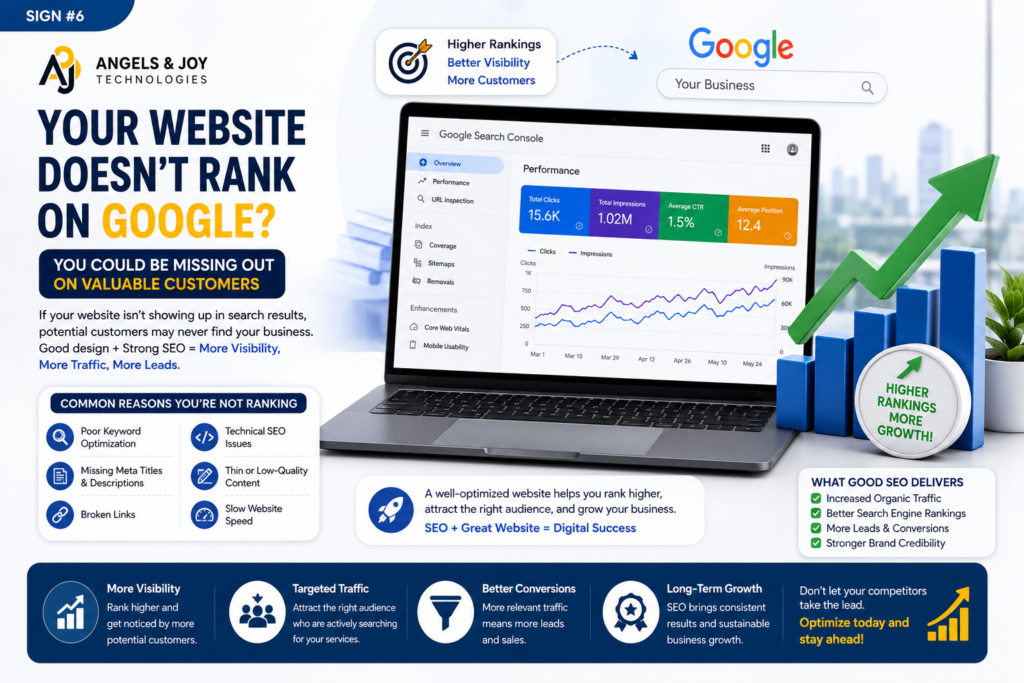
Even a beautiful website won’t help if nobody can find it.
If your website doesn’t appear in search results, potential customers may never discover your business.
Common SEO issues include:
- Missing keywords
- Poor page structure
- Weak content
- Missing meta titles
- Broken links
- Technical errors
Search engine optimization works together with good design to improve visibility and attract organic traffic.
7. Updating Your Website Is Difficult
Can you easily update your phone number, add a new service, or publish a blog?
If every small change requires technical assistance, your website is limiting your business instead of supporting it.
Modern websites should make it simple to:
- Publish blogs
- Add pages
- Update pricing
- Change images
- Modify contact details
Easy content management saves time and keeps your website current.
8. Your Branding Is Inconsistent
Your website should reflect your brand identity.
If your logo, colors, typography, messaging, and visuals don’t work together consistently, visitors may become confused about your business.
Strong branding creates recognition and builds trust.
Consistency across every page helps customers remember your business and feel more confident choosing your services.
9. Your Website Has No Clear Call-to-Action
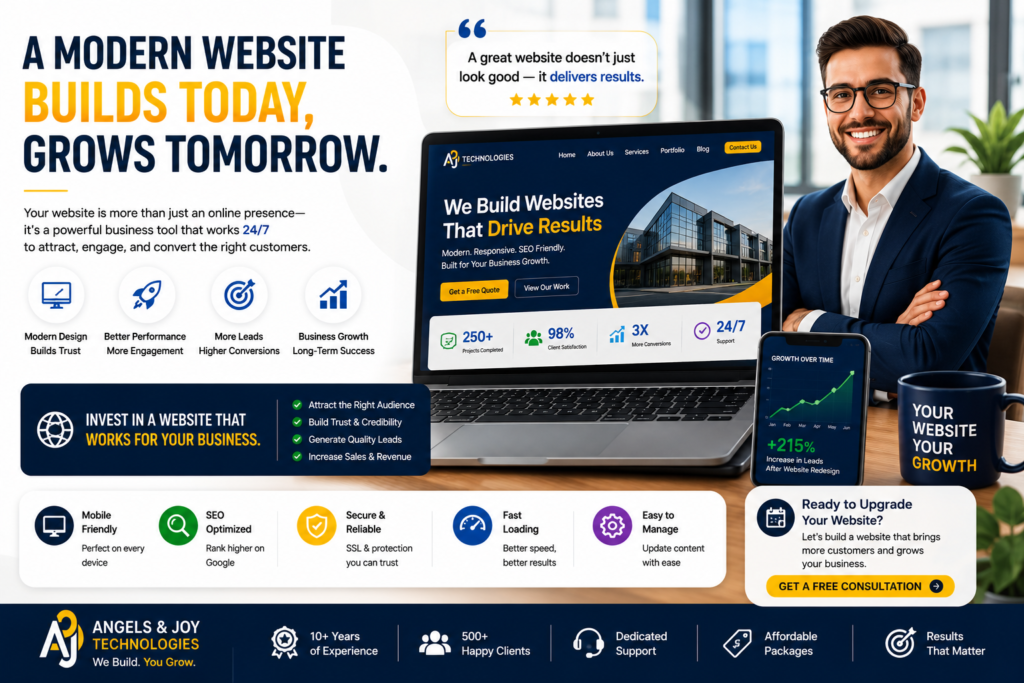
Visitors should never wonder what to do next.
Every important page should include a clear action, such as:
- Contact Us
- Request a Quote
- Book a Consultation
- Get Started
- Call Now
- Message on WhatsApp
Without clear guidance, visitors often leave without taking action.
Simple, strategically placed buttons can significantly improve conversion rates.
10. Your Website Isn’t Secure
Security is essential for every business website.
If your website doesn’t use HTTPS or displays browser security warnings, visitors may hesitate to share their information.
Regular updates, secure hosting, SSL certificates, and proper website maintenance help protect both your business and your customers.
A secure website also supports better search engine rankings.
11. Poor User Experience
Even attractive websites can fail if they’re difficult to use.
Common user experience problems include:
- Confusing menus
- Broken links
- Hard-to-read text
- Too much information
- Poor navigation
- Inconsistent layouts
Visitors should quickly find the information they’re looking for.
A simple, intuitive design keeps users engaged and increases the likelihood of conversions.
12. Your Website No Longer Represents Your Business
Businesses grow over time.
Perhaps you’ve added new services, expanded your team, changed your branding, or entered new markets.
If your website still reflects your business from several years ago, it may no longer accurately represent who you are today.
Ask yourself:
- Have we introduced new services?
- Have our prices changed?
- Have we updated our branding?
- Are our contact details current?
- Does our website reflect our business goals?
If the answer is no, it’s probably time for a redesign.
Why Investing in a Modern Website Matters
A modern website isn’t just about appearance.
It can help your business:
- Build credibility
- Improve customer trust
- Generate more leads
- Increase search engine visibility
- Support digital marketing campaigns
- Strengthen your brand
- Improve conversion rates
- Stay competitive
Your website should work as a 24/7 salesperson—informing visitors, answering questions, and encouraging them to take action even when your business is closed.
Final Thoughts
Technology continues to evolve, and customer expectations continue to rise. A website that performed well several years ago may no longer meet today’s standards for speed, usability, security, or search engine optimization.
If you recognized several of the signs discussed in this article, it may be time to evaluate whether your website is helping your business grow—or holding it back.
Investing in a professionally designed website is an investment in your business’s future. A modern website improves credibility, attracts more qualified visitors, and creates a better experience that encourages customers to contact you instead of your competitors.
Whether you’re a startup, local business, clinic, restaurant, gym, retail store, or professional service provider, your website should clearly communicate your value, build trust, and support long-term business growth.
Frequently Asked Questions
1. How often should I redesign my website?
Most businesses should review their website every 3–5 years or whenever there are significant changes in technology, branding, or customer expectations.
2. Can I improve my existing website instead of building a new one?
Minor improvements may help, but if your website has outdated technology, poor performance, or an old design, a complete redesign often provides better long-term results.
3. Does a new website improve Google rankings?
A modern website with good SEO, faster loading speeds, mobile responsiveness, and quality content can improve your search visibility over time.
4. How do I know if my website is costing me customers?
High bounce rates, low inquiry rates, slow loading speeds, and poor mobile performance are common signs that your website may be losing potential customers.
Ready to Upgrade Your Website?
At Angels & Joy Technologies, we create professional, modern, and conversion-focused websites designed to help businesses build trust, generate quality leads, and grow online. Whether you need a brand-new website or a complete redesign, we’re here to help you create a digital presence that delivers real business results.
👉 Get Your Free Website Consultation Today